About exchange integrations
☞ The renaming of “Ledger Live” to “Ledger Wallet” and “wallet” (in the hardware sense) to “signer” is still in progress. This page may contain legacy references that will be updated.
A centralized exchange can appear inside Ledger Wallet in two ways.
The first is a Live App in Discover. You skip the exchange API and integrate the app through Discover. Users open it from the Discover catalog rather than from Buy, Sell, Swap, or Card.
The second is a native integration. The service is listed in Buy, Sell, Swap, or Card. Ledger Wallet requests quotes from your backend, opens your Live App with the quote already filled in, and asks the user’s signer to approve the transaction. That path needs the API as well as the Live App. It is the integration described in this section. Talk to Ledger before you build it, so you can confirm the product fits.
Discover and the native Buy, Sell, Swap, or Card flows are different integrations. A Discover Live App does not appear in those sections, and a native integration is not listed in Discover unless you also complete that path.
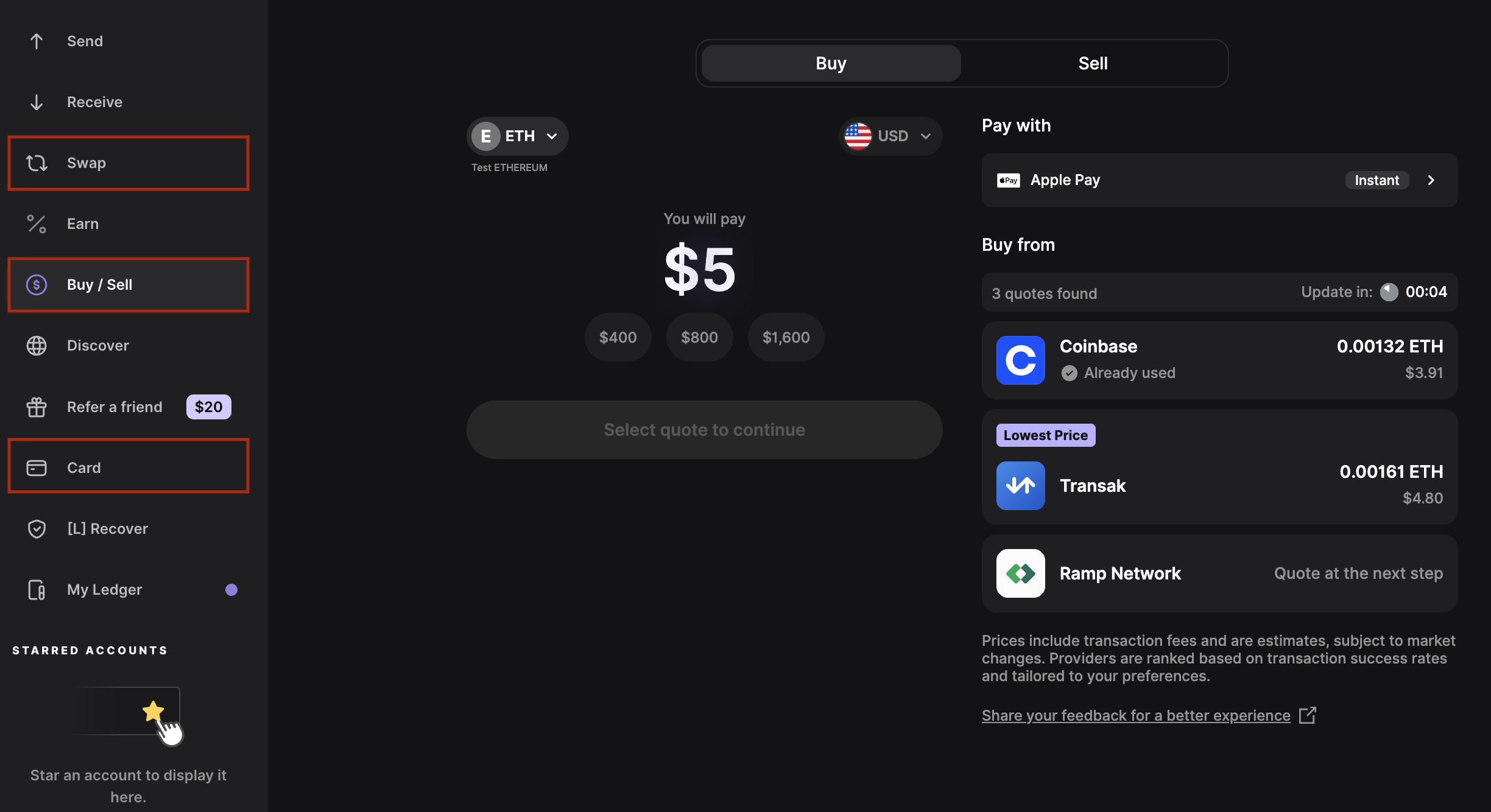
Each native product has its own backend contract, Live App rules, and test steps. Swap can skip the Live App when the exchange is non-KYC and does not need a custom interface. Buy, Sell, Earn, and Card each describe what you deliver before the integration can go live.
Further reading
For a Discover Live App, start with About Live Apps.
